Why study the Master of Counselling online with the University of Melbourne?

Become the counsellor you want to be
Counselling isn't one-size-fits-all, so your learning shouldn't be either. In this degree, you can shape your studies around where you want to make your impact. Whether in schools, community, healthcare or private practice, your learning is career-aligned and supported by a final project tailored to your intended focus area.

Evidence-based approaches for complex conversations
Build a powerful toolkit of specialised techniques you can shape to any counselling need. Learning from world-leading academics, you'll draw on innovative narrative therapy, mental health and trauma-informed approaches to deliver support with immediate and lasting impact.

You're in control of your learning
Wherever you are, you can take charge of your learning experience. Whether this means engaging live or when it suits you; taking breaks or accelerating; connecting with others or running your own race. You're in control – of your work, study and life.
Course highlights
- Master the core theories and practical skills that underpin effective counselling
- Confidently navigate complex trauma and mental health experiences
- Build trusted and recognised expertise backed by Australian Counselling Association (ACA) accreditation
- Develop inclusive and culturally responsive counselling techniques to foster genuine connection with clients
- Explore innovative counselling techniques like narrative therapy informed by cutting-edge research at the University of Melbourne
- Enhance your practice and grow your network with in-person placement preparation in Parkville's world-class biomedical precinct
- Cultivate professional capability with a meaningful project shaped by your own interests and goals in the field
- Strengthen your practice through personalised placements.


Learn from world-leading academics
Benefit from expert-led contemporary learning as you prepare for the next phase of your career. Engage with our world-leading academics whose opinions are sought after by government, shaping strategy and influencing policy.
Download your course guide to meet the team responsible for the Master of Counselling at Australia’s #1 university^.
^ Average of the latest Academic Ranking of World Universities (ARWU), QS and Times Higher Education (THE) global university rankings
How we launch your counselling career
Professional placement is a cornerstone of the online Master of Counselling, giving you the opportunity to translate theory into meaningful practice.
With counsellors in strong demand, University of Melbourne placements have been known to lead directly to employment.
Across 210 hours of placement, you will:
- Build confidence in your skills
- Gain first-hand experience working with clients
- Work towards your Australian Counselling Association (ACA) registration.
To find out more about your placement experience, download a course guide.
To best prepare for your placement, you will complete a five-day in-person experience in Parkville's world-class biomedical precinct. This immersive experience aims to strengthen your counselling skills through supervised practice, simulation and peer feedback.
You'll complete placement preparation alongside your fellow students. This experience helps you form a supportive network of like-minded peers to learn, grow and progress together professionally.
When organising your placement, you can choose the level of support that works best for you. Your options are:
- Matched placement: We match you to a placement provider by using the Faculty of Medicine, Dentistry and Health Sciences' extensive networks. We accommodate your location and setting preferences where possible
- Self-sourced placement: You'll have the freedom to find a placement provider in an area you're passionate about.
This means you can shape an experience that's truly your own. Whether that's a particular area of focus, a specific organisation, a location that suits you, or an online placement for added flexibility.
Weekly online integration seminars are available to help keep you connected with teaching staff and fellow students. These sessions provide a regular space to share your experiences and reflect on how you're applying your learning to real-world practice.
Career outcomes
With mental health services facing increasing pressure across Australia, counsellors with advanced training are in high demand1.
Postgraduate qualifications in counselling are now the standard, demonstrating the expertise and ethical grounding needed to practise effectively.
- 85% of practising counsellors hold counselling-specific postgraduate qualifications, most commonly a Master of Counselling2
- Counsellors with postgraduate qualifications report higher weekly consultations compared with vocational diploma-qualified counsellors.2
If you are an aspiring counsellor, this Master of Counselling provides the academic foundation required for registration with the Australian Counselling Association (ACA).
This transformative qualification will prepare you for counselling and support roles across:
- Allied health
- Business
- Community services
- Disability
- Education
- Government
- Public and private hospitals
- Private practice
- Youth services.
1 Opportunities grow for registered counsellors, Psychotherapy and Counselling Federation of Australia (PACFA), 2025
2 Workforce Census, Australian Counselling Association, 2024

Pathways
Choose between two pathways to complete your masters. The coursework pathway centres on a real-world innovation project of your choice, while the research pathway supports progression to a PhD in counselling.
In each pathway, you will complete two counselling placements, designed to support your transition from coursework to professional practice. These placements are delivered as subjects Counselling Placement A and Counselling Placement B.
This pathway empowers you to transform ideas into practical counselling solutions through an innovative capstone. Alternatively, you can use your innovation capstone to develop a business case for opening your own private practice.
This hands-on experience builds confidence and capability, providing the time and space to focus on areas of counselling you are passionate about.
Subjects
Compulsory:
- Counselling Theories and Frameworks
- Counselling Skills
- Ethics, Law and Professional Practice
- Assessment and Case Conceptualisation
- Mental Health and Wellbeing
- Trauma Informed Counselling
- Residential Industry Experience
- Counselling Placement A
- Counselling Placement B
- Indigenous and Decolonising Practices.
Plus:
- Counselling Practice Innovation Capstone.
Conduct a thorough investigation of a significant problem of your choice that is related to counselling. This pathway option is designed to equip you with the skills needed to perform rigorous and impactful research in your field.
The research pathway is intended to provide you with a viable pathway to a PhD in counselling.
Subjects
Compulsory:
- Counselling Theories and Frameworks
- Counselling Skills
- Ethics, Law and Professional Practice
- Assessment and Case Conceptualisation
- Mental Health and Wellbeing
- Trauma Informed Counselling
- Residential Industry Experience
- Counselling Placement A
- Counselling Placement B
- Indigenous and Decolonising Practices.
Plus:
- Counselling Research Capstone.
Subjects of study
Designed for those starting their counselling career and experienced counsellors, this online counselling degree equips you with the latest evidence-based knowledge and frameworks to support clients effectively.
Across 12 subjects, including two supervised placements, you'll strengthen your client-centred approach and develop the expertise required to make a real impact.
arrow_right_altDownload your course guide for more information
Explore foundational and contemporary counselling theories that underpin ethical and effective practice. You will explore a range of frameworks, including psychodynamic, person-centred, cognitive behavioural and narrative approaches.
Develop the interpersonal, reflective and communication skills required for counselling practice. This subject prepares you for your future residential and professional placement by building your capacity to form safe, ethical and collaborative therapeutic relationships.
Examine the ethical, legal and professional foundations of counselling practice. You will examine national and international codes of ethics, statutory obligations and regulatory frameworks that guide decision-making and protect client wellbeing. Through practical activities you will apply ethical-reasoning models to complex scenarios and reflect on your emerging professional identity and responsibility for self-care and supervision.
This subject equips you to uphold culturally competent, accountable practice in placement and beyond.
In this subject, you will develop skills in comprehensive client assessment and psychosocial formulation. You will have opportunities to practice identifying presenting concerns, evaluate risk and protective factors, and attend to cultural, developmental, and systemic contexts.
Explore contemporary approaches to mental health and wellbeing through different lenses, including lived experience, recovery-oriented practice and trauma-informed care.
Using case-based and experiential learning, you will develop the skills to recognise distress, respond with empathy, and support pathways to culturally safe and inclusive care across diverse populations.
Develop the knowledge and skills required to respond safely, ethically, and effectively to trauma across life stages and settings. You will explore how trauma, including complex trauma and Post-Traumatic Stress Disorder (PTSD), impacts the brain, body, and behaviour, and examine its implications for therapeutic work.
In this hybrid subject, you will blend flexible online study with a five-day in-person experience in Parkville. Building on the first six subjects, you will consolidate your counselling knowledge and skills through supervised practice sessions, immersive in-person simulations and structured peer feedback.
Practical experience is important for your counselling education, extending your development of counselling skills with real-world experience and the varied clients you will work with in professional practice.
You will undertake Counselling Placement A in a professional counselling context, guided by an approved counselling supervisor. Placements will usually be structured as two days per week for seven weeks of placement.
Weekly online integration seminars run throughout your placements, giving you a regular opportunity to reconnect with teaching staff and fellow students.
Build on the foundational skills developed in Counselling Placement A to deepen your practice. Placement B is typically completed with the same placement provider.
Weekly online integration seminars run throughout your placements, giving you a regular opportunity to reconnect with teaching staff and fellow students.
Grounded in respect for cultural diversity, this subject introduces you to Indigenous knowledge systems, relationality, community-centred healing and the role of story, land and spirituality in wellbeing. Through critical reflection, case studies and experiential learning, you will develop practical strategies for integrating decolonising principles into your professional counselling practice.
The Counselling Practice Innovation capstone is a unique feature of this masters degree. It offers an exciting way to bring together the knowledge, skills and practice experience you’ve developed into a meaningful project of your choice. You will reflect upon and further explore key learnings to design a practice innovation or service improvement project related to your areas of interest and future development as a professional counsellor.
Potential projects might include the design of a client-facing tool, training module, policy submission, service enhancement plan, or business case to establish a private practice.
The Counselling Research capstone provides the freedom to design and explore a research project that connects directly to counselling practice.
You will have the opportunity to work with a supervisor to undertake a literature review, develop research questions and undertake the research activities required to answer your research question. The research capstone is designed to provide a pathway to a PhD should you wish to pursue further research studies in the future.

You’re in control of your learning experience
- Find freedom with the choice of how and where you study
- Have more control over your learning with the ability to take breaks from study when needed
- Receive ongoing one-on-one support from application through to graduation
- Access resources and support systems designed to help you succeed
- Experience personalised interactions from expert educators who value your development
- Gain a competitive edge with a recognised qualification from Australia’s top university^.
Find out more about the online experience at the University of Melbourne.
Entry requirements
In order to be considered for entry, applicants must have completed either:
- A bachelors degree in a related discipline such as Health Sciences, Social Work, Psychology, Medicine, Nursing, Occupational Therapy, Teaching, Education or
- A bachelors degree or equivalent in any discipline, and at least two years of relevant full-time work experience (or equivalent) or
- At least six years of relevant full-time work experience (or equivalent), including clear evidence of career development, professional writing, and professional achievement or practice comparable to that expected of undergraduate degree holders in cognate disciplines.
Meeting these requirements does not guarantee selection.
Please note: Graduate diploma and masters students are required to undergo a National Police check and relevant state-based checks (ie Working with Vulnerable People Check, Working With Children Check) as required by each placement agency in order to be accepted for each subject that includes a placement.
arrow_right_alt Download your course guide for more information
You may be eligible if you have completed a qualification in a related discipline aligned to the field of health and human services.
Example study areas include:
- Community services
- Counselling education
- Family work
- Health sciences
- Nursing
- Occupational therapy
- Psychology
- Social sciences
- Social work
- Youth mental health
- Youth work.
You may also be eligible based on your professional experience. This includes roles demonstrating:
- Supporting individuals with emotional, social or behavioural challenges
- Working with vulnerable or at-risk populations
- Supporting learning, development, or behavioural outcomes
- Supporting patient wellbeing, recovery or care.
Examples of relevant roles include:
- Allied Health Professional
- Career Counsellor
- Case Manager
- Case Worker / Support Coordinator
- Crisis Support / Helpline Worker
- Disability Support Worker
- General Practitioner
- HR Adviser
- Learning Support Officer
- Mental Health Support Worker
- Nurse
- Occupational Therapist
- Police Officer
- Social Services
- Student Wellbeing Officer
- Teacher
- Youth Worker.
Applicants without a related degree who are applying using relevant work experience will be assessed on a case-by-case basis to confirm eligibility and academic readiness.
You may be required to provide a CV or other supporting documentation as part of the assessment process.
All applicants to the University of Melbourne must satisfy the English language requirements. This may be achieved in a number of ways, including recognised previous study taught and assessed entirely in English or an approved English language test.
If you are from a non-English speaking background, the required standard of English for this degree is one of the following English proficiency test scores:
- IELTS: 6.5 (with no band less than 6.0);
- TOEFL: 81 (with writing 19, speaking 19, reading 16, listening 16);
- Pearson: 64 (with no communicative skill below 60);
- Cambridge C1 Advanced: 169 (with writing 170, speaking 179, reading 163, listening 163);
- LanguageCert Academic: 67 (with writing 64, speaking 70, reading 60, listening 57);
- MET: 58 (with writing 57, speaking 48, reading 55, listening 56).
In ranking applications, the Selection Committee will consider:
- Prior academic performance; and, if relevant
- Professional experience.
The Selection Committee may seek further information to clarify any aspect of an application in accordance with the Academic Board rules on the use of selection instruments.
Applicants are required to satisfy the university's English language requirements for postgraduate courses. For those applicants seeking to meet these requirements by one of the standard tests approved by the Academic Board, performance band 6.5 is required. In considering students under special entry access schemes, the Selection Committee will consider aspects of disadvantage as set out from time to time in the University of Melbourne Graduate Access policy, evidence of rurality for rural applicants, and confirmation of Aboriginality for Indigenous applicants.
Applicants who receive a course offer can apply to transfer any recognised prior learning by applying for Advanced Standing (also known as credit or recognition of prior learning).
Advanced standing is the acknowledgement of prior study or work experience. If an applicant is awarded advanced standing, the length of their degree may be reduced.
Fees and FEE-HELP
Cost per 12.5 credit point subject: $4,248*
Total cost: $53,525*
FEE-HELP is a loan that can cover all or part of tuition fees for eligible students. The Australian Government pays the amount of the loan direct to the University. It enables you to borrow the amount of your tuition fees and then pay that loan back once you are in the workforce and earning at a specified level or you can make voluntary repayments to the ATO at any time.
For more information, including eligibility for FEE-HELP, download your Master of Counselling course guide.
*Fees are subject to annual review by the university, with any new rates effective from the beginning of each calendar year.
Other expenses
You will need to consider additional expenses associated with your course, including the cost of placement, residential component, any required checks and accommodation.
Designed for impact
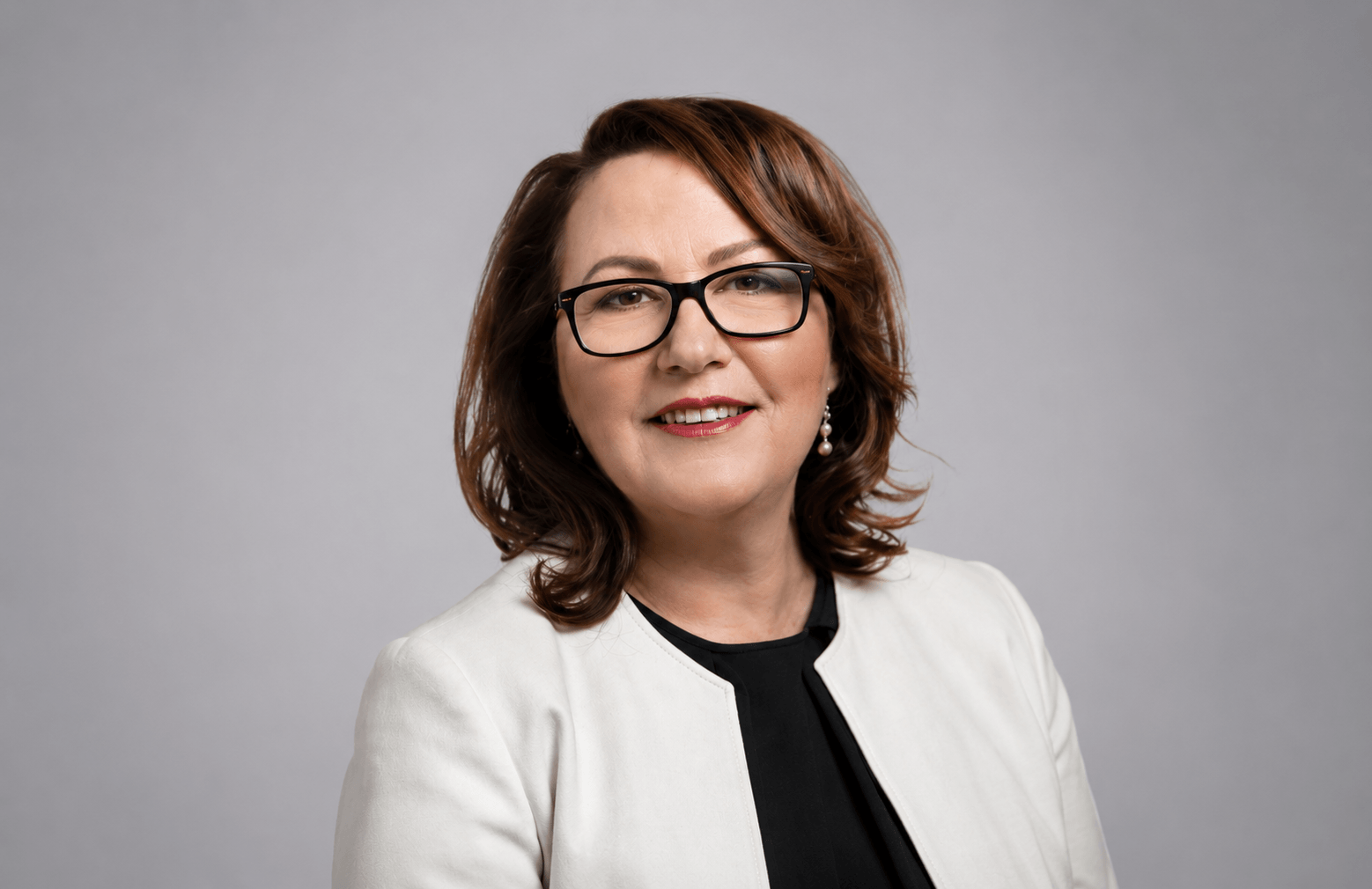
"Counselling offers a remarkable career, helping individuals, families and communities, shaping policy and services, and working across health, education, community and private sectors. Drawing on my extensive counselling and leadership experience, I look forward to guiding you to develop not only therapeutic skills but professional confidence, adaptability and ethical practice so you can make a meaningful, sustained difference wherever your career leads."
Dr Lyndal Hickey
Course Director, online Master of Counselling
Enquire and receive your course guide
Discover more information on our courses, including:
- Entry requirements
- Career outcomes
- Subject descriptions
- Fees and FEE-HELP.
Related courses
Find the qualification that helps you make a difference in the spaces you care about with our counselling and youth mental health courses.
Frequently asked questions
In Australia, counsellors are not legally required to hold a specific licence to practise, however, professional registration an industry body like with the Australian Counselling Association (ACA) is widely regarded as an industry standard and increasingly expected by employers.
The ACA recognises qualifications at different levels, from bachelor degrees through to masters degrees, each supporting a different tier of membership. A Master of Counselling is the highest qualification pathway, supporting full ACA registration.
The University of Melbourne's online Master of Counselling is ACA-accredited and includes 210 hours of professional placement, giving you the credentials and experience employers look for.
A master of counselling can open doors to many diverse and rewarding people-centred careers. Students are prepared to work across many counselling contexts, including mental health, family and relationship counselling, employment, youth and school settings, trauma-informed practice, community services and private practice.
Beyond traditional counselling roles, the skills gained through a master of counselling are highly transferable. Counselling expertise strengthens your communication, active listening and problem-solving skills, making it valuable across industries such as healthcare, education, community services, business and the not-for-profit sector.
Yes. Placement is one of the most valuable and rewarding parts of the degree. Professional placement is a cornerstone of the University of Melbourne's online Master of Counselling, giving you the chance to take everything you've learned and apply it in real counselling settings. Across 210 hours of placement, you'll build confidence working with clients and work towards your ACA registration.
No, a master of counselling is not the same as a master of psychology. While both study areas are deeply committed to supporting mental health and overall wellbeing, they have different focuses.
A master of counselling is focused on building therapeutic relationships and applying evidence-based approaches, like narrative therapy and trauma-informed care, to help people navigate life's challenges.
On the other hand, psychology tends to involve more clinical assessment, diagnosis and research.
Placement is organised in one of two ways: you can be matched to a provider, or you can source your own. Both options come with full support from our dedicated placement team. Your options are:
- Matched placement: We match you to a placement provider by using the Faculty of Medicine, Dentistry and Health Sciences' extensive networks. We accommodate your location and setting preferences where possible
- Self-sourced placement: You'll have the freedom to find a placement provider in an area you're passionate about.
For those completing the graduate diploma or masters, you’ll come together with your fellow students for a five-day in-person experience at Parkville's world-class biomedical precinct in Melbourne. Taking place before your first placement, the experience is an immersive few days of supervised practice, simulation and peer feedback, designed to sharpen your skills and build confidence before stepping into the field. It's also a great opportunity to connect with the people you'll be learning alongside throughout the degree.
The University of Melbourne's online Master of Counselling is accredited by the Australian Counselling Association (ACA), the leading professional body for counsellors in Australia. That means when you graduate, you'll be well-positioned to pursue ACA registration and step into your counselling career with credentials that employers recognise and respect.
Yes, it is possible to complete your placement online via telehealth. The Australian Counselling Association (ACA) supports telehealth-only placements in its guidelines, reflecting the growing role of digital service delivery across the counselling profession.
If remote placement is of interest to you, we recommend getting in touch with our placement team early in your studies so we can find an opportunity with a suitable host organisation.
No, this course is only available to domestic students in Australia. If you are an international student seeking a course where you can make a meaningful impact, please visit our online Master of Youth Mental Health course page.
Yes a master of counselling is worth it if you’re looking for a career where you get to help others and make a real impact. In Australia, a master degree in counselling is particularly valuable for those aiming to work as a professionally recognised Australian Counselling Association (ACA) counsellor. The qualification provides advanced training in core counselling skills alongside specialised approaches such as mental health practice, trauma-informed care and narrative therapy. A master of counselling also develops a strong understanding of the ethics regulations that underpin safe practice. As the industry moves towards higher training standards, a master of counselling is important for meeting these industry expectations, building trust within the profession, and protecting the integrity of counselling as a profession. This depth of learning equips you to respond effectively and confidently to a wide range of counselling needs across different settings and contexts.